
Cultivating trust in the voting process is a major challenge for election officials. Our research shows that hiring veterans as election workers - and telling the public - can increase trust.
Jul 01, 2026 | By: Mike Hanmer
Local election officials didn’t create the election trust crisis. But they do have tools to address it.
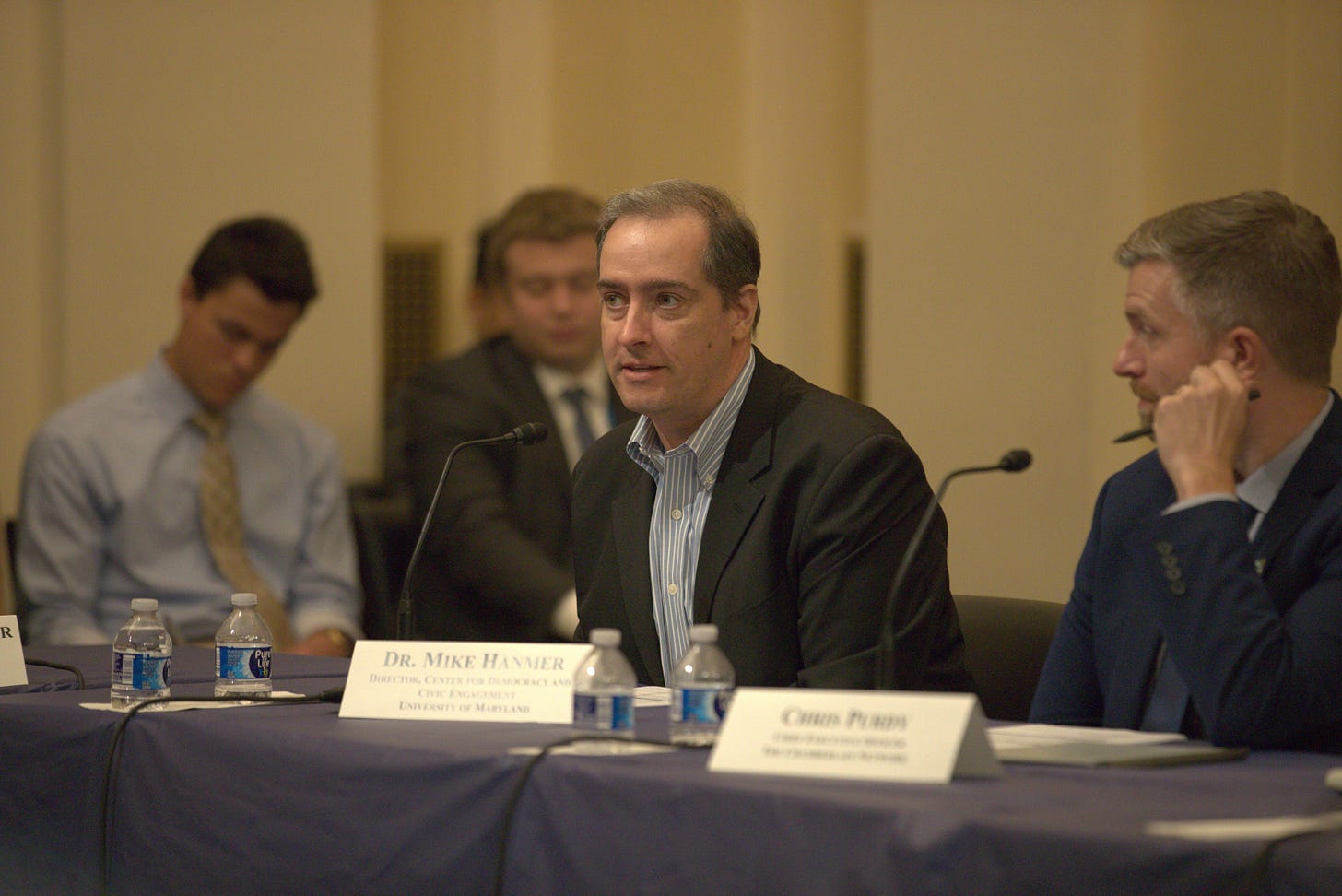
Last week, Ranking Member Takano of the House Veterans’ Affairs Committee led a roundtable on efforts to engage veterans in nonpartisan civic activities. I was excited to participate with an amazing group, including Ellen Gustafson, Co-Founder and Executive Director of We the Veterans & Military Families. As primary elections continue and the general elections near, I hope that election officials will find our research helpful.
Many of the most important factors driving election trust are outside the control of local and state election officials. But local and state election officials are not powerless. Election performance has been shown to have a modest effect on election trust. Voters also are more likely to trust the voting process after they engage with competent poll workers or take tours of election facilities. Our research builds on this body of work by showing how voters respond to learning that veterans and military family members serve as election workers.
Our research shows that the most distrustful voters are more than 15% more likely to say they trust the election process when they learn veterans and military family members serve as election workers.
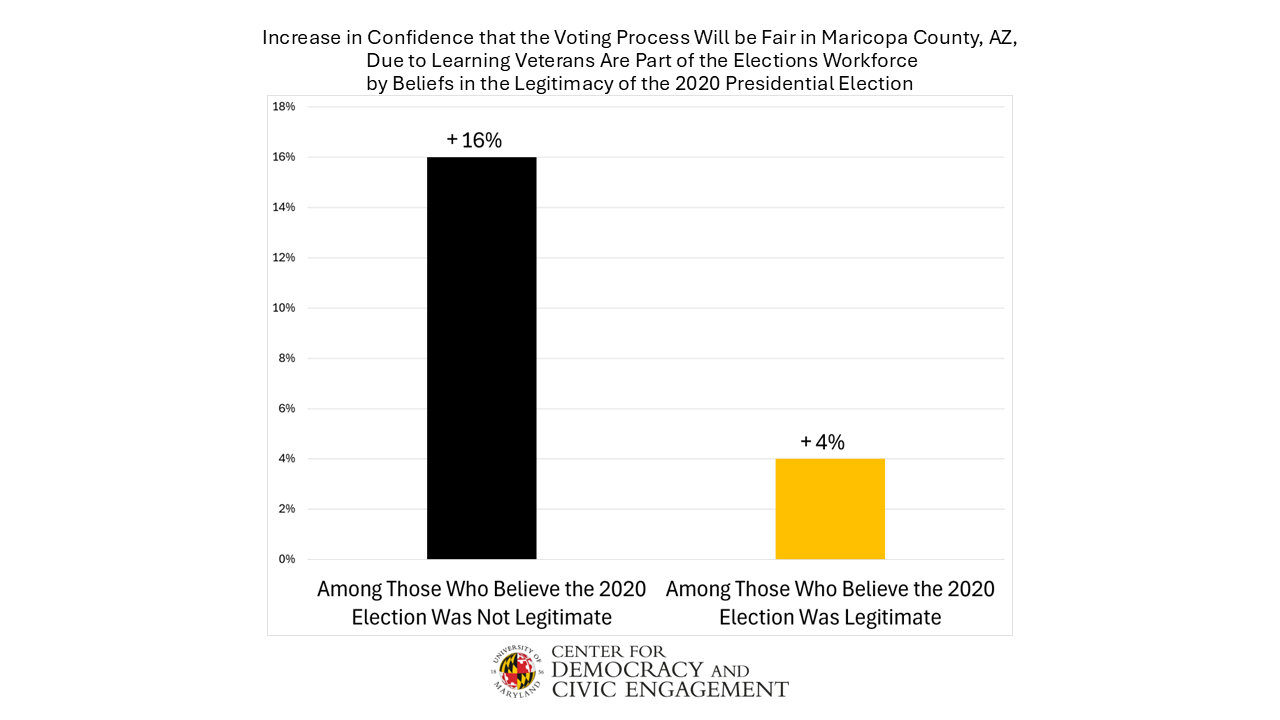
Learning that veterans and military family members are part of the elections workforce led to a large increase in confidence that the voting process would be fair.
As with many of our most impactful projects at CDCE, this study began with a question that came to us from practitioners. The team at We The Veterans and Military Families had been running an amazing campaign called “Vet The Vote” to recruit veterans and military family members to serve as poll workers. They knew the campaign was effective at generating applications (over 150,000 veterans and military family members applied to work as poll workers!) and that many election officials benefitted from their service on Election Day. But our partners also wanted to know if this campaign could increase trust in elections. The military is one of the most trusted institutions in the United States and the American public holds veterans in high regard, so we expected the answer would be yes.
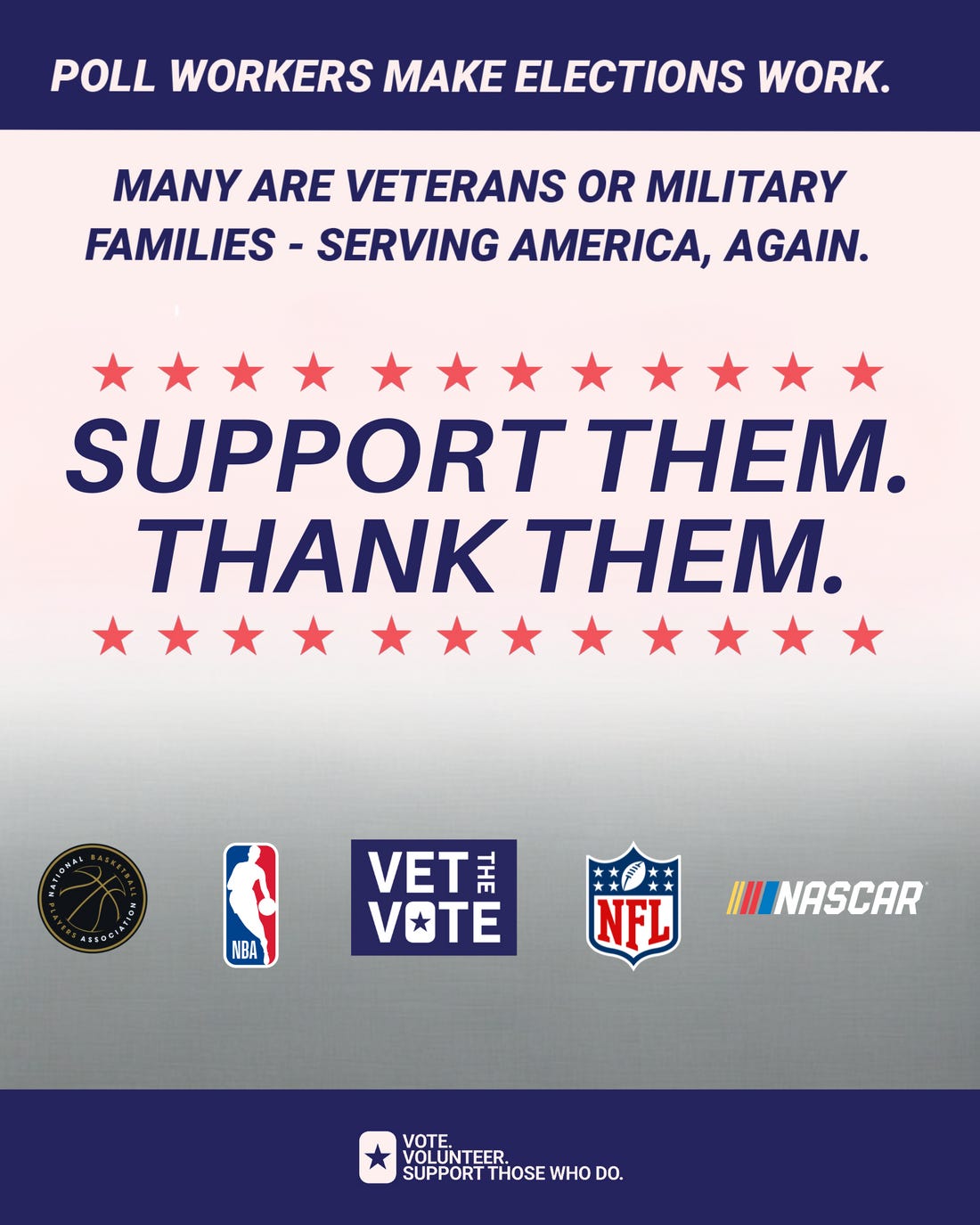
Vet the Vote partnered with major sports leagues to promote their campaign. This both attracted applicants and informed millions of fans of these leagues that veterans participate in the elections workforce.
In order to test this hypothesis, our research team partnered with the team at We the Veterans and Military Families to conduct a message test. We randomly assigned survey respondents to read one of two short passages based on real news stories about hiring for elections jobs in Maricopa County, Arizona. We set the scene there due the increased scrutiny and even threats election officials in Maricopa County have faced since the 2020 elections. The treatment group read about an effort to recruit veterans and their families from the local community to elections jobs, and the control group read about a generic recruitment effort to hire local community members to elections jobs. Here is the excerpt that we showed as our treatment.
Local Military Veterans Recruited for Election Jobs in Maricopa County
PHOENIX (AP) — Election officials in Maricopa County, Arizona, announced a program designed to recruit military veterans and their family members from the community to serve as election administrators, including election polling place workers, temporary workers, and full-time staff. As the U.S. general elections in November near, election officials must fill several thousand temporary positions and hundreds of other open positions to ensure sufficient staffing for the 2024 elections and beyond.
Army veteran Jordan Braxton just joined the elections workforce. Jordan believes their role is important to ensuring a secure, accurate, and transparent election, “Many places are short on staff this election cycle. I served my country in the Army, and I want to do my part as a veteran and a citizen to ensure that everyone trusts the process and the outcome of the election.”
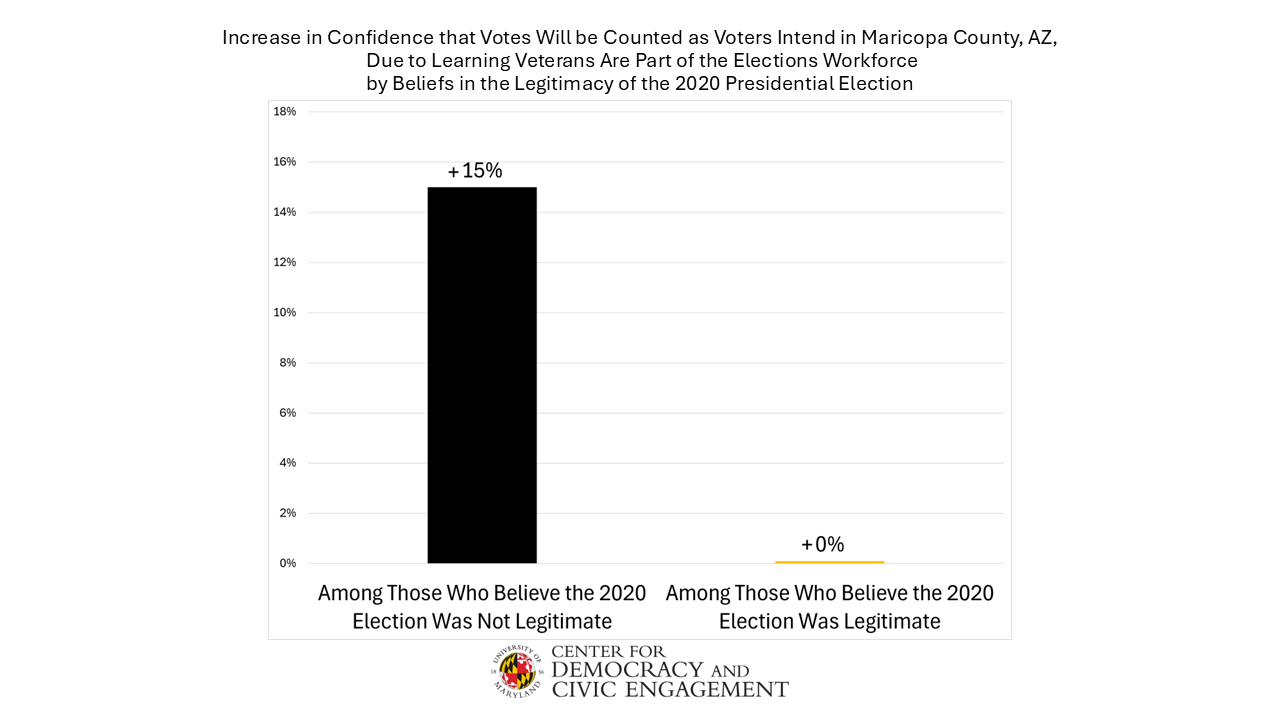
Trust in elections among people who feel the 2020 was not legitimate was much higher in the treatment condition where they learned veterans serve in the elections workforce.
Across all the questions we asked in this message test, we saw significant effects from telling voters that veterans and military family members serve on the elections staff. They were more confident votes would be counted as voters intended. They were more likely to say the process is fair and more likely to say polling places will be safe and free from political violence and intimidation. These effects were concentrated among the least trusting voters. For many questions, the gap in trust between voters who believe the 2020 election was legitimate and those who do not was cut in half when voters were told that veterans and military family members were hired to serve in the elections workforce.
The upshot? Reporting that veterans and military family members serve in the elections workforce can increase trust in the election process.
Our research shows that local and state election officials, as well as their partners like We The Veterans and Military Families can have a powerful impact by explicitly and publicly recruiting veterans and military family members to serve as poll workers and in full time roles as elections professionals. Telling their stories of service widely can increase trust, especially among voters who doubt the legitimacy of elections.
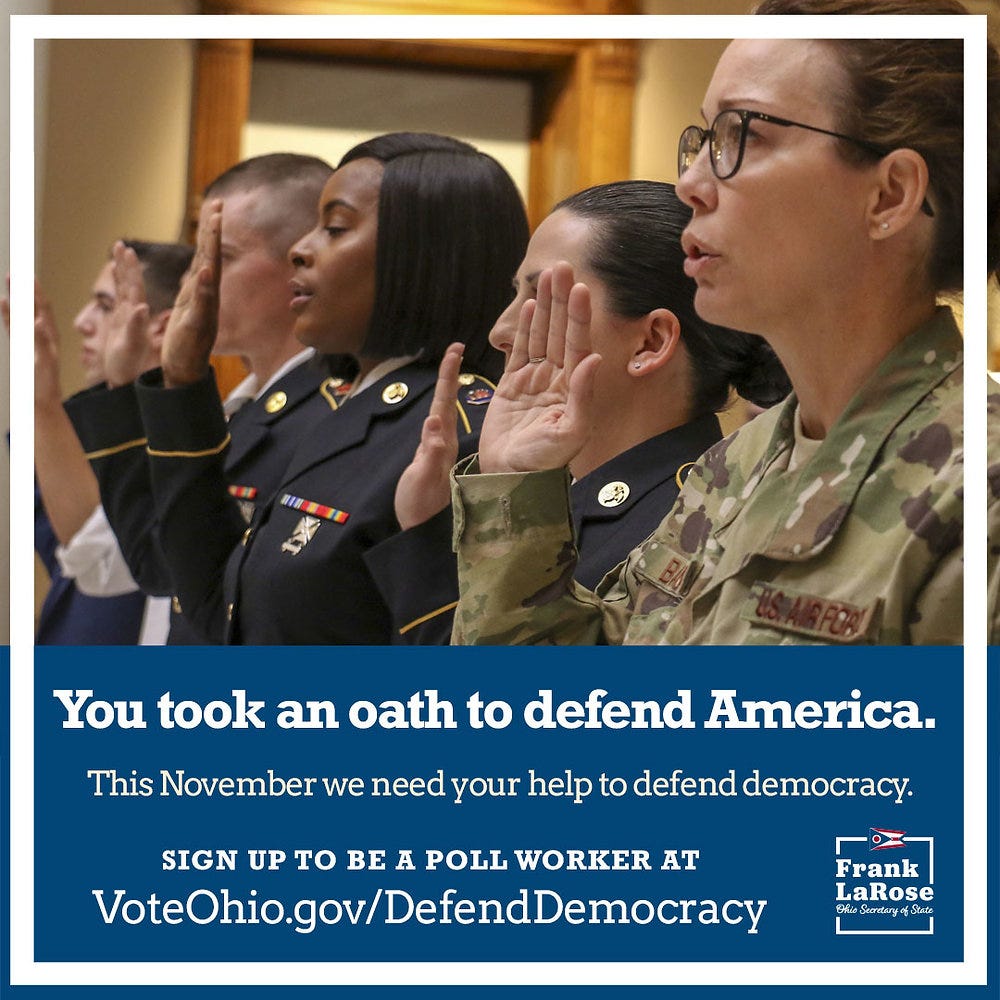
This ad from Ohio Secretary of State Frank LaRose is an example of messaging that both brings veterans into the elections workforce and communicates to the public that veterans are serving as poll workers in ways that increase trust in elections.
In addition to recruitment efforts, local and state election officials have opportunities to highlight the service of the veterans and military family members that are already on their teams. They can ask about the veteran status of current staff members and publicize the extent to which veterans are already playing a leadership role in stewarding the election process. Our research suggests that this too should increase trust in elections.
And officials in both the military and election agencies can do more to promote election jobs as a great option for veterans transitioning from active duty. The skills people learn from military service are often applicable to the needs of election agencies. The stability and sense of purpose and mission that an election job provides can also be a good fit for veterans who are looking to continue building their legacy of service to their nation and community.
Cultivating trust in the elections process is one of the hardest and most important challenges facing American democracy right now. Many of the most powerful forces that undermine election trust - especially the parts of human psychology that lead people to blame the process if their preferred candidates lose and the rhetoric of elected officials that indulges this psychology - are outside the control of local and state election officials. But our research adds to a growing body of work showing that they are not powerless in the face of these challenges. Recruiting and publicizing the service of veterans and military family members in the elections workforce is another effective tool that election officials and partners can use to meet this moment.
Mike Hanmer is the Director of the University of Maryland Center for Democracy and Civic Engagement, Professor and Michael Miller Endowed Faculty Fellow in Government and Politics, and co-Principal Investigator of the Maryland Democracy Initiative.

